【About the Course】
NIBB-Princeton Joint Proteomics Training Course 2024 - Advanced proteomics to define protein function and dynamic regulation - is a 3-day practical course combining hands-on training and lectures. It is being held for the first time after the course in 2017. In the upcoming course, students will learn essential skills in proteomic sample preparation, LC-MS/MS instrument method development, quantitative proteomics analysis, and data interpretation. In the hands-on training, students will focus on sample preparation for whole proteome and proximity labeling quantitative mass spectrometry analysis. The students will take these datasets through guided, hands-on bioinformatics tutorials utilizing open-source software platforms to perform quantitative and functional analysis. Course lectures will cover a range of topics, from the basics of LC-MS/MS instrumentation to emerging proteomics technologies, including protein complex analysis, spatially restricted proteomes, near single cell samples, and bioinformatic strategies for data analysis and biological interpretation. We are pleased to have Prof. Ileana Cristea and Dr. Todd Greco from Princeton University, and Prof. Hidetaka Kosako from Tokushima University who are world-leading scientists in this field, to give intensive lectures and experimental instruction on mass-spectrometry and bioinformatics, and proximity labeling analyses.
【Report】
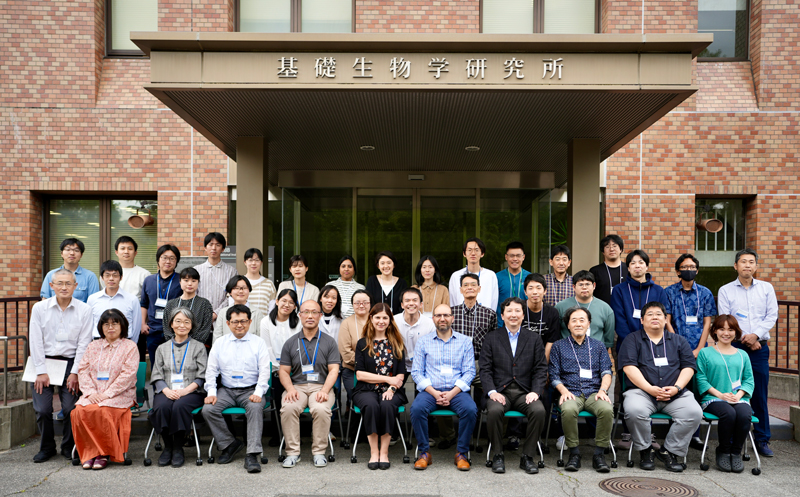
For the first time in seven years, Princeton University and the National Institute for Basic Biology (NIBB) jointly held an international training course on proteome analysis in Okazaki, Japan. The course was strongly supported by the National Institutes of Natural Sciences (NINS), with special contributions from Prof. Naoto Ueno. The invited guest lecturers included Prof. Ileana Cristea and Dr. Todd Greco from Princeton University, as well as Prof. Hidetaka Kosako from the Institute of Advanced Medical Sciences (IAMS), Tokushima University. The four institutions, including NIBB, collaborated closely to manage the course effectively. Efforts were made to accommodate as many students as possible within the constraints of the available experimental space. Out of 38 applicants, 29 participants were selected, including one from an overseas institution (Qatar) and four international students from domestic institutions in Japan. The male-to-female ratio among participants was approximately 6:4.
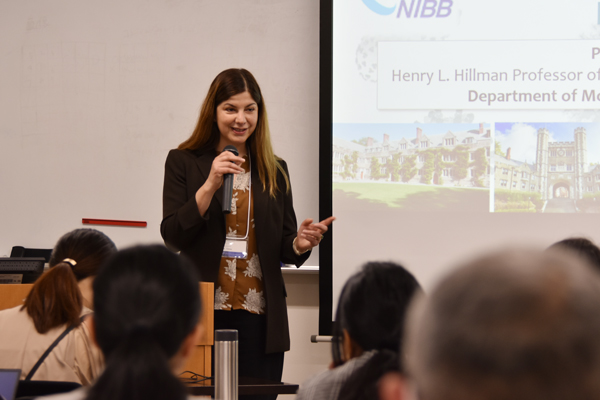
The three-day course combined classroom lectures with practical training. At the opening session, Prof. Kiyokazu Agata, Director-General of NIBB, emphasized the importance of proteome analysis in modern biological research and encouraged participants to master the analytical methods presented during the course. The course began with a lecture by Prof. Cristea, who provided an introduction to proteome analysis using mass spectrometry, focusing on the principles of protein quantification. This was followed by a lecture from Dr. Todd Greco, who delivered a more detailed explanation of the instrumental principles underlying mass spectrometry.
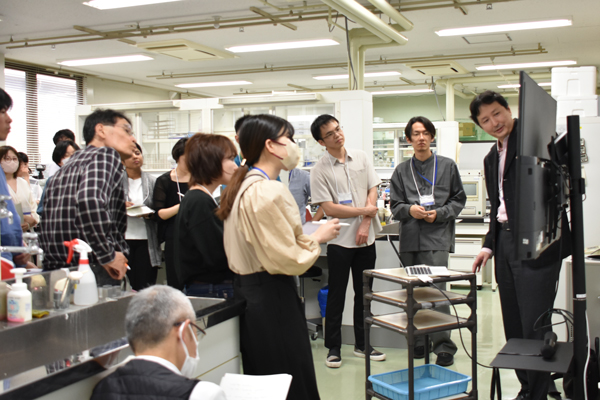
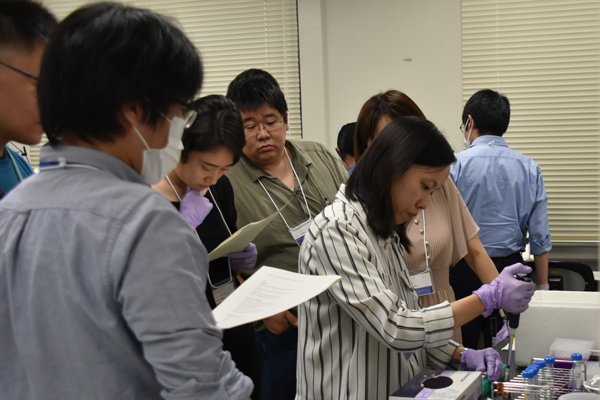
The theme of this year's course was "Proteome Analysis Using Proximity Labeling", with a focus on mastering the procedures for sample preparation. The session began with a lecture by Prof. Kosako, who explained the principles of the method. Following the lecture, participants were divided into six groups to carry out the sample preparation. During the practical training, participants actively engaged with the instructors, asking numerous questions. The extensive notes taken on the distributed protocols reflected their enthusiasm and commitment to learning. The first day's practical training concluded with the initiation of overnight enzymatic digestion of protein samples. In the evening, participants and lecturers gathered for a reception in the hall. The informal setting provided an opportunity for attendees to connect, discuss their research, and exchange experiences related to study abroad and academic pursuits.
On the second day, the practical training continued with further steps in the sample preparation process, complemented by a lecture on protein-protein interactions and data analysis. A key highlight of the day was the application of the participants’ prepared samples to the mass spectrometer. This process was demonstrated by Ms. Yumiko Makino (NIBB) at the Trans-Omics Facility, directly in front of the mass spectrometer. Although the original plan was to use the new timsTOF fleX (Bruker), an instrument malfunction necessitated a switch to the Orbitrap Elite (Thermo Fisher Scientific) for the analysis. To ensure a comprehensive learning experience, IAMS provided preliminary data from a sister instrument, timsTOF HT, as part of a backup plan. This allowed participants to compare and analyze data from instruments with differing characteristics, enriching their understanding of mass spectrometry technologies.
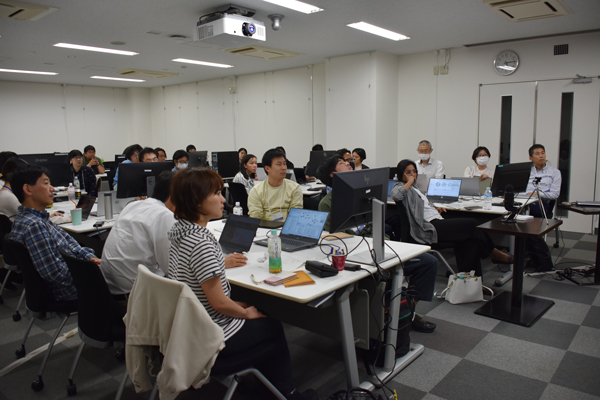
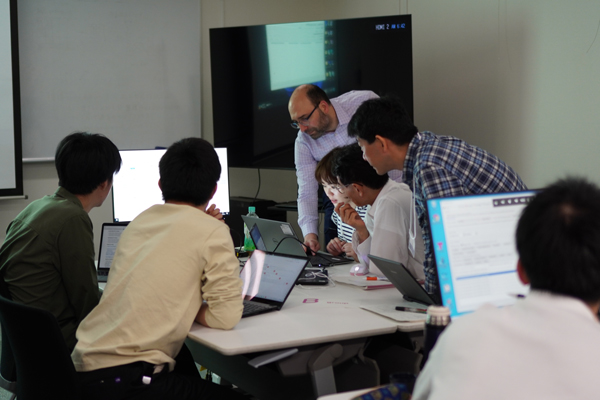
On the third day, the course focused heavily on bioinformatics practice, alongside a lecture by Prof. Cristea. Under the guidance of Dr. Greco, participants worked in groups, following his explanations as they practiced everything from data analysis to creating figures to present their results, using dedicated analysis computers. To address time constraints, raw data generated during the course, as well as preliminary data prepared in advance, were distributed to participants for further review at their own pace. Additionally, participants were provided with information on analysis tools and relevant references to support their independent learning and future applications of the techniques.
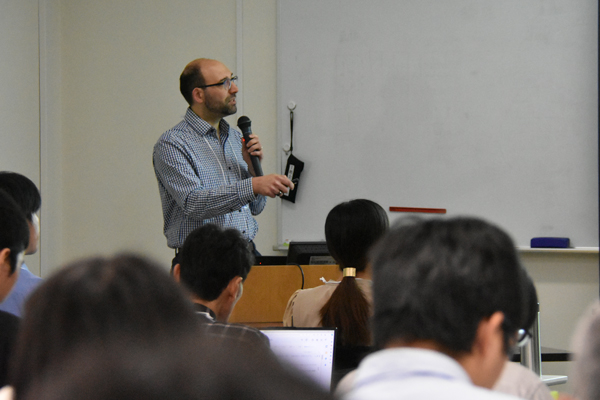
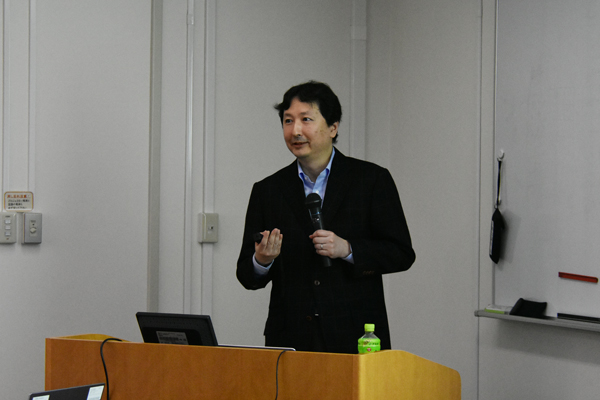
A major highlight of the course was the three days of hybrid scientific lectures, which were live-streamed to on-site participants as well as to the institute and partner institutions. Prof. Cristea delivered a lecture on inter-organelle and intercellular communication in the microenvironment of viral infection, showcasing groundbreaking research based on proteome analysis. This work exemplified the concept of "Trans-Scale Biology" that we are actively promoting, and it left a strong impression on us. Prof. Kosako discussed the development of advanced technologies related to the proximity-dependent biotin labeling method. His presentation highlighted not only his innovative technological contributions but also the breadth of collaborative research projects he is conducting, which amazed us. Dr. Greco gave an engaging talk on protein-protein interactions studied through proteomic approaches in the context of Huntington’s disease. His presentation provided valuable insights into applied research, demonstrating the translational potential of proteomics in pathobiology.
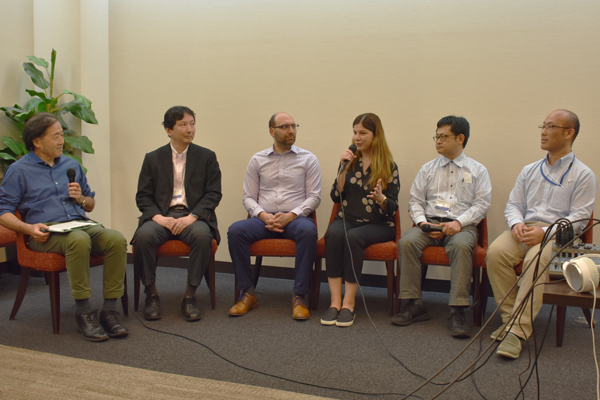
The course concluded with a summary session held as a panel discussion. Moderated by Prof. Ueno, the panel featured Prof. Cristea, Dr. Greco, Prof. Kosako, Prof. Shuji Shigenobu (NIBB), and Dr. Yoshida (myself). The panelists shared their impressions of the course and discussed the current state and future directions of proteome analysis. Due to space constraints, the session was live-streamed to the next room, where the participants were seated. Despite this arrangement, we hope they were able to gain valuable insights from the panelists’ impressions and perspectives. The session concluded with Prof. Ueno expressing gratitude to all the supporting organizations and staff for their dedication and hard work in making the course a success.
Many individuals contributed to the successful organization of this course. In particular, I would like to extend my sincere gratitude to Dr. Kohei Nishino (Tokushima University), Ms. Yumiko Makino (NIBB), and Ms. Tomoko Mori (NIBB). Their indispensable support in the technical aspects, including laboratory practice and mass spectrometer analysis, was crucial to the course’s success.
Takuya Yoshida (Trans-Scale Biology Center, NIBB)
Program
May 15th, 2024
Proteomics Lecture I; Preparation of experimental samples;
May 16th, 2024
Proteomics Lecture II; LS-MS/MS analysis;
May 17th, 2024
Proteomics Lecture III, Data analysis