
National Institute for Basic Biology




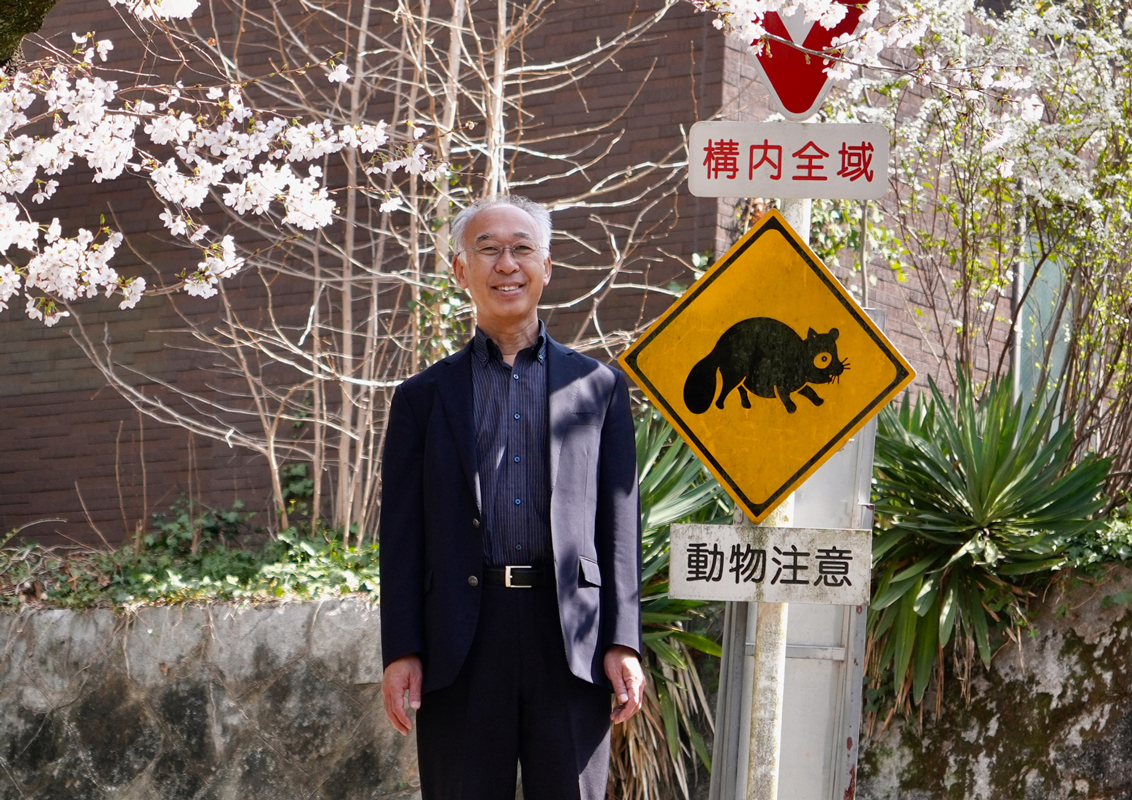
It has already been one year since I took up my post at the National Institute for Basic Biology (NIBB) last April. Returning to Okazaki after 36 years, I feel the profound passage of time as I look at how much the trees surrounding the institute have grown. In this area, which is blessed with abundant nature despite being a residential district, I remember listening to young bush warblers practicing their songs with all their might when I first arrived. By mid-March of this year, their first songs had become as masterful as those of their parents. Through these birdsong, I feel the transition of the seasons and the fiscal year.
In the past, molecular biology’s intense focus on phage and E. coli research led to the establishment of the "Central Dogma" of gene expression, revealing that it has become clear that the universal principles of life that what happens in E. coli also holds true in humans. The impact of this achievement was immense, establishing a style of research concentrated on specific model organisms and leading to a leap in our understanding of the molecular mechanisms shared by all living things. Our institute was founded in 1977, exactly at the dawn of an era when the introduction of recombinant DNA technology began to fundamentally transform the nature of research. Half a century later, today, technology has advanced to the point where we can interpret organisms not only as “matter” but also as “information” in the form of genomes. We have now entered an era in which we can freely extract genomic information from all living organisms, transcending species boundaries.
It is estimated that approximately 8.7 million species exist on Earth. The reason such vast diversity is maintained is not only due to differences in genomic information, but also because of the mechanisms that allow organisms to utilize that genomic information flexibly according to their environment. The anthropologist Claude Lévi-Strauss proposed the concept of “bricolage” through his analysis of indigenous societies. This refers to a way of creating new systems by skillfully combining whatever materials are available on the spot, rather than relying on a pre-existing blueprint. It suggests that rather than a linear path of progress from "primitive" to "superior," a "good enough" system or entity can be created by combining available resources amidst changes in circumstances. Perhaps the reason organisms can adapt to harsh circumstances without necessarily waiting for new genetic mutations is because they practice this "bricolage."
Masayuki Miura, Director General of the National Institute for Basic Biology
April 1, 2026
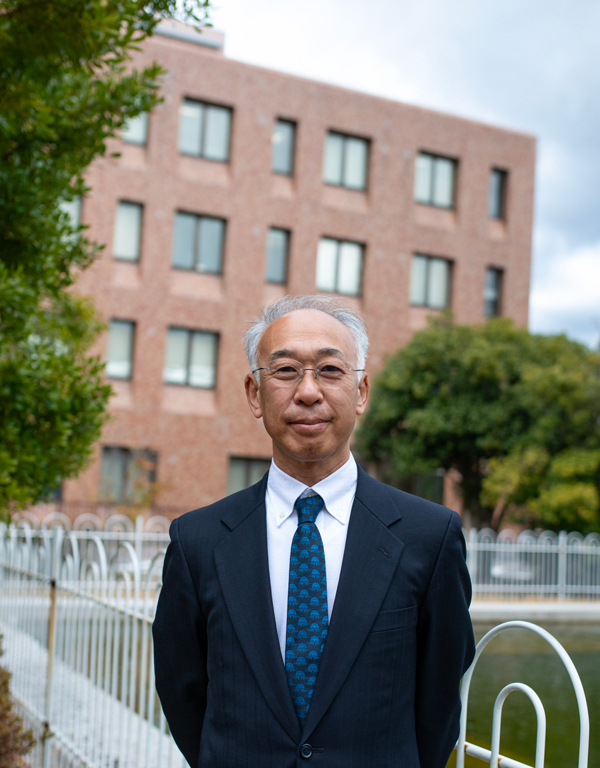
Masayuki Miura, Director General of the National Institute for Basic Biology
April 1, 2025