Cells rely on complex signaling networks in which different molecular pathways communicate with one another. Small GTPases act as molecular switches in these networks, controlling diverse cellular processes such as intracellular transport and cell morphogenesis. Although crosstalk between different families of small GTPases is established in animal cells, whether and how such crosstalk occurs in plants has remained largely unknown.
A research team led by Associate Professor Emi Ito and Professor Takashi Ueda at the National Institute for Basic Biology (NIBB), together with collaborators at Ochanomizu University, Kyoto Prefectural University, Saitama University, Nagoya University, and RIKEN, has now uncovered a molecular mechanism that connects two distinct types of small GTPases in the model plant
Arabidopsis thaliana. The study was published in
Nature Plants.
The researchers identified a protein called REAP1/SWAP70 that links RAB5, a small GTPase involved in intracellular membrane trafficking, with ROP7, a member of the plant-specific ROP (Rho of Plants) family of small GTPases involved in processes such as cell morphogenesis. Their findings reveal a previously unknown RAB5–REAP1–ROP7 signaling pathway and show that this pathway plays an important role in normal pollen development.
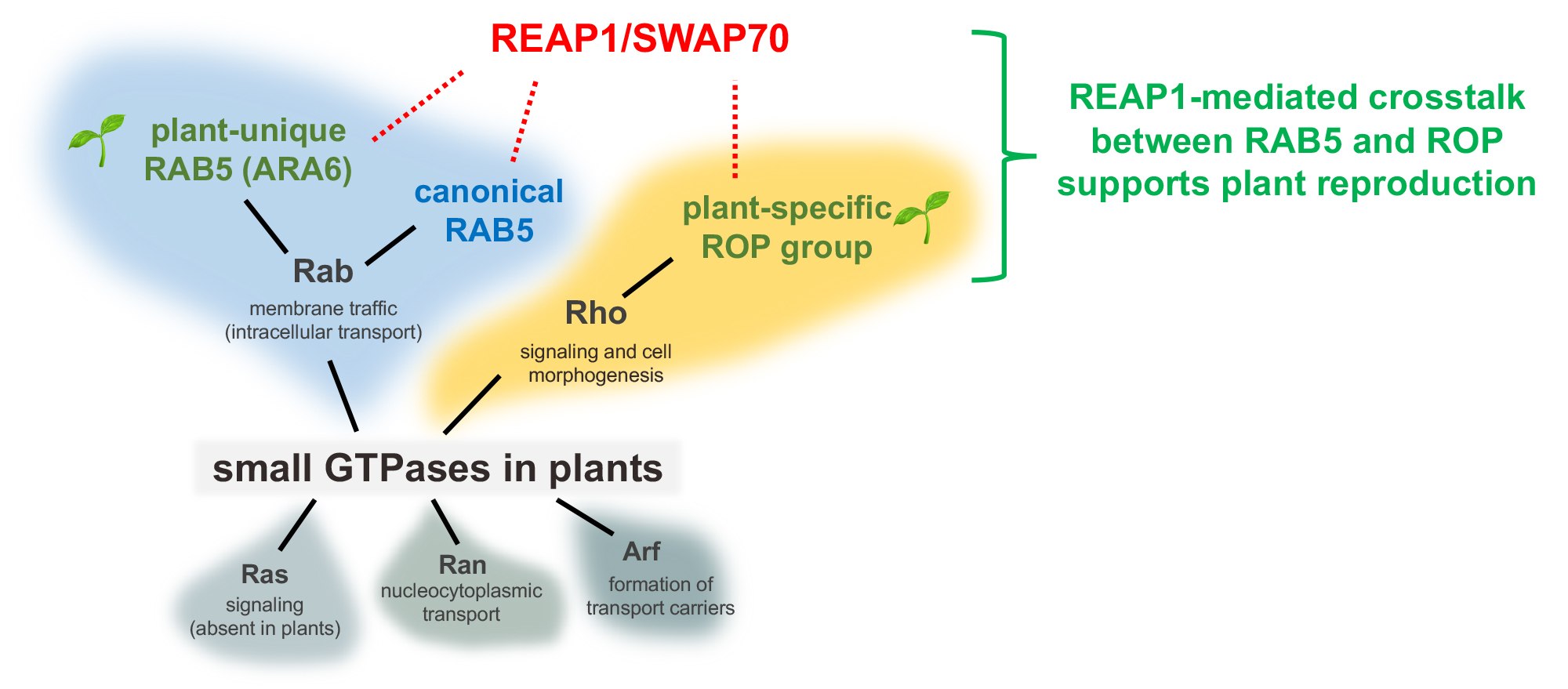 Figure 1: Small GTPase crosstalk uncovered in plants
.
REAP1 links RAB5 and ROP, two distinct types of small GTPases, revealing a previously unknown mechanism of small GTPase crosstalk in plants.
Copyright: Division of Cellular Dynamics, NIBB
Plants have evolved their own repertoire of small GTPases. These include ARA6, a plant-unique member of the RAB5 family, as well as ROPs, a plant-specific group within the Rho family of small GTPases. While these proteins regulate a variety of plant-specific cellular processes, it has remained unclear whether different small GTPase families communicate with one another.
Using Arabidopsis, the researchers found that REAP1 interacts with both the plant-unique RAB5 member ARA6 and canonical RAB5 proteins that are widely conserved in eukaryotic cells. REAP1 localizes to endosomes, intracellular compartments that serve as hubs for membrane trafficking. This localization depends on interactions with both RAB5 and specific membrane lipids.
The team further discovered that REAP1 binds to ROP7. Overexpression of RAB5 promoted the recruitment of ROP7 to endosomes, whereas this recruitment did not occur in cells lacking REAP1. These findings indicate that REAP1 acts as a molecular bridge connecting RAB5 and ROP7.
Importantly, disrupting this signaling network affected pollen development. When RAB5 and ROP7 functions were simultaneously reduced, defects occurred during the transition from the unicellular to bicellular stage of pollen development, resulting in an increased number of pollen grains that failed to mature normally. Together, these findings demonstrate that communication between RAB5 and ROP7 through REAP1 contributes to plant reproduction.
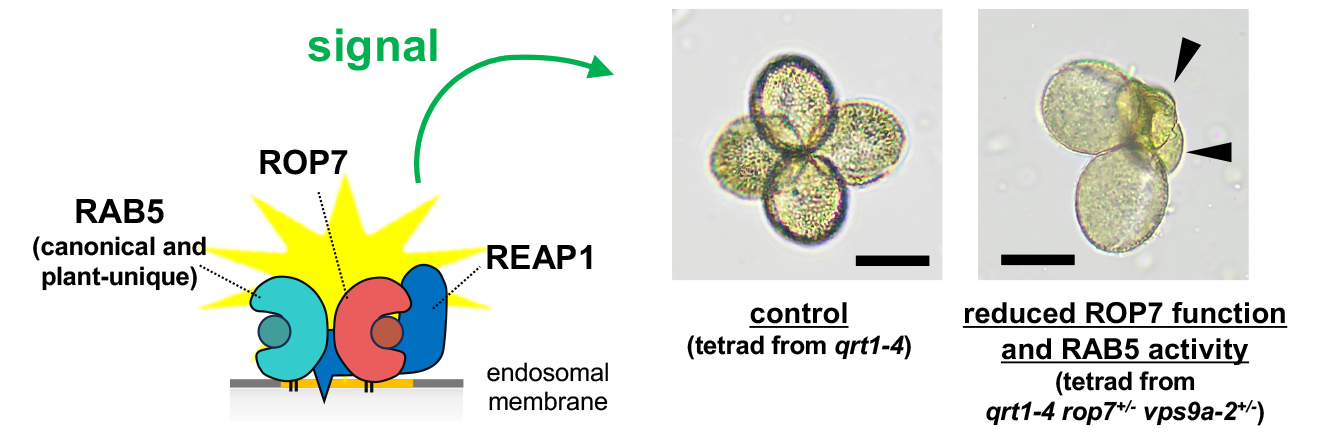 Figure 2: The RAB5–REAP1–ROP7 signaling network supports normal pollen development.
Left, schematic representation of the RAB5-REAP1-ROP7 network. Right, abnormal pollen grains (arrowheads) were observed in approximately half of the pollen tetrads when ROP7 function and RAB5 activity were simultaneously reduced. Scale bar, 20 μm.
Copyright: Division of Cellular Dynamics, NIBB
“Small GTPases are widely conserved across eukaryotes, but plants have also acquired their own unique small GTPases during evolution,” said Emi Ito, first author and co-corresponding author of the study. “What we find particularly interesting is that plants, like other eukaryotes, use crosstalk between different small GTPases. Here, this crosstalk involves GTPase systems that have uniquely diversified in plants and contributes to the control of reproduction, one of the most fundamental processes in the plant life cycle. The fact that different organisms have evolved crosstalk between small GTPases raises the possibility that connecting these molecular switches is a particularly efficient way to coordinate different cellular processes.”
The findings provide new insight into how different small GTPase systems are integrated in plants and suggest that plants have evolved their own interconnected signaling networks to coordinate cellular processes essential for reproduction.
Paper information
Journal: Nature Plants
Title: “REAP1/AtSWAP70 integrates RAB5 and ROP signaling during sexual reproduction”
Authors: Emi Ito, Natalia Julia Rzepecka, Yoko Ito, Tomoko Hirano, Kazuo Ebine, Yoshihisa Oda, Masa H. Sato, Akihiko Nakano, Tomohiro Uemura, Takashi Ueda
DOI:
https://doi.org/10.1038/s41477-026-02368-8
Expert Contact
Emi Ito
Division of Cellular Dynamics
National Institute for Basic Biology, NINS
itoemi@nibb.ac.jp
Media Contact
Public Relations Group
National Institute for Basic Biology, NINS
press@nibb.ac.jp
EurekAlert!
https://www.eurekalert.org/news-releases/1144359